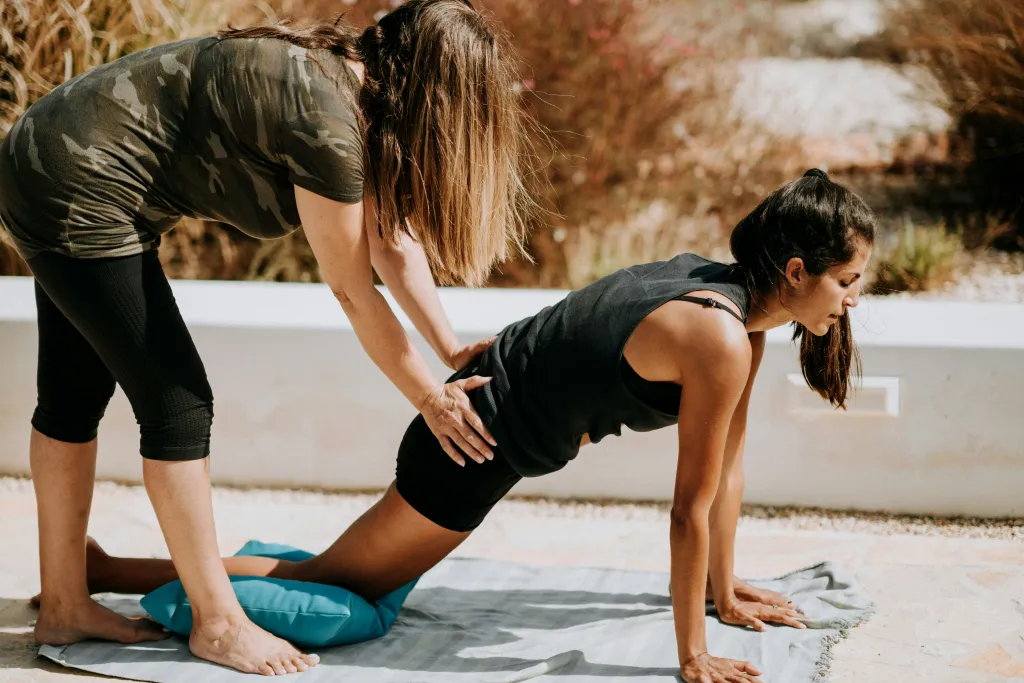
Yoga props are an amazing asset to your practice… If you know how to use them.
It is a common misconception that props are reserved for beginner practitioners. The truth is, it’s about what you do with them.
I have been doing yoga for over a decade, and I always have a pair of blocks and a blanket on hand. Props are not only an excellent way to create comfort and ease in your practice, they can often be used to challenge your muscle engagement or balance.
Props and Their Purpose
Aside from the yoga mat, the most commonly included props in yoga practice are blocks, straps, and bolsters. This short list is by no means exhaustive, and I love getting creative with ordinary household objects to design an effective and engaging practice.
Blocks (Bricks)
Standard yoga blocks provide support and stability, helping practitioners maintain proper alignment and extend their reach in various poses. The reclangular shape allows the practitioner to position the block in three different orientations, depending on the pose and the purpose of the prop in question.
Typically, these yoga blocks range from softer foam blocks to firmer ones (made from cork or wood). It’s best to have a pair of blocks for a wide variety of poses.
- Bridge the gap in standing poses and forward bends (Uttanasana, Trikonasana, Ardha Chandrasana)
- Elevation in seated or kneeling poses to ease tension in the hips, ankles, or lower back (Sukhasana, Virasana, Rajakapotasana)
- Muscle engagement and alignment (block between your thighs in Bridge, block between hands in Anjaneyasana, Urdhva Hastasana)
- Support for ankles and wrists in poses that require deep flexion (Malasana, Bakasana)
Chipfoam Blocks
These blocks tend to be broader and softer than yoga bricks. They can mimic some of the similar functions, along with providing cushioning for sensitive joints.
- Elevation in seated or kneeling poses to ease tension in the hips, ankles, or lower back (Sukhasana, Virasana)
- Knee support in asymmetrical poses (Anyaneyasana, Ardha Hanumanasana)
- Gentle connection in grounding poses (block under forehead in Balasana, block between seat and ankles in Vajrasana, Balasana)
Yoga Strap
A typical yoga strap is about 1½ inch wide, made from non-elastic woven material, with a buckle on one end to give you the option to create a loop. Yoga straps assist in deepening stretches and improving flexibility by extending your reach and maintaining proper form.
However, you can easily substitute it for a belt, robe tie, elastic gym band, or even a tea towel. I’ve come across some jiu-jitsu belts in a second-hand store, and they work just as well.
- Extend reach in poses that require hand-to-foot contact (Paschimottanasana, Padangusthasana, Natarajasana)
- Limit abduction of arms and legs to keep you in alignment (Wheel, Bridge, Pincha Mayurasana, Chaturanga Dandasana)
- Hand-to-hand connection for people with tight shoulders (Warrior I, Humble Warrior, Gomukasana)

Bolster
Yoga bolsters provide firm, comfortable support for grounding and restorative poses, helping to enhance relaxation.
- Elevation in seated or kneeling poses to ease tension in the hips, ankles, or lower back (Sukhasana, Virasana)
- Support and gentle backbend in reclined poses (Supta Virasana, Supta Baddha Konasana), particularly great for adjusting practice for pregnancy
- Lower back support (bolster under the knees in Savasana, bolster under the pelvis in Viparita Karani)
Yoga Wheel
Less common than the other props listed here, yoga wheels aid in improving flexibility, deepening backbends, and adding an extra challenge to balance and core-strengthening poses.
- Practice deep backbends with support (Matsyasana, Laghu Vajrasana)
- Extra stability in inversions (Pincha Mayurasana, Salamba Sarvangasana, Halasana)
- Challenge your balance in standing, squatting, or hand balancing poses.
Household Objects as Props

In addition to (or instead of) buying made-for-purpose yoga props, you can enhance your practice by using things you have on hand.
- Blankets are excellent for cushioning joints, gentle elevation, and creating comfort in Savasana. The beauty of blankets is that you can use as few or as many as you like.
- Cushions and pillows are great for restorative practice. Depending on the way you arrange them, they can act as replacement for bolsters and chipfoam blocks.
- Microfibre towels can act as a yoga strap. Alternatively, they are great for absorbing moisture and stopping you from sliding on your mat.
- Chairs can make yoga more accessible overall or provide stability in poses or transitions reliant on balance.
- Walls are helpful for prioperception feedback, stability in balance poses, and security in inversions (Handstand, Pincha Mayurasana).
In Conclusion
Yoga props aren’t just for beginners; they’re tools that can enhance your practice by encouraging proper alignment, which can actually feel more challenging.
While props can elevate your yoga experience, you don’t have to spend a ton. Household items can serve as effective alternatives, making yoga accessible to everyone.